
PROTECTING CRITICAL ENVIRONMENTS: ANTEROOMS IN HEALTHCARE CONSTRUCTION AND INFECTION CONTROL
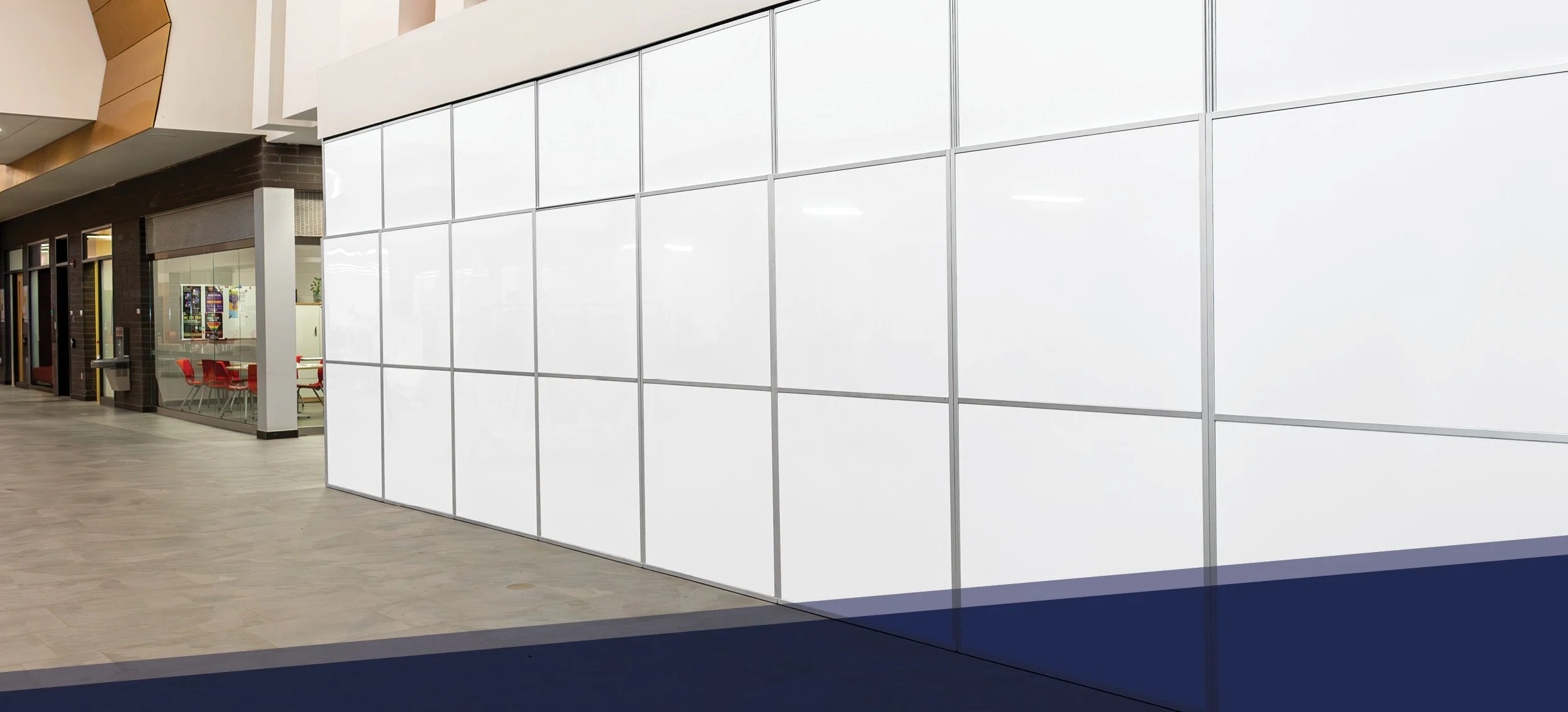
Critical environments require pressurized anterooms to prevent air contamination during construction and restoration work, or infectious outbreaks.
Anterooms under negative pressure help prevent the passage of airborne contaminants into clean spaces.
Modular systems like SHIELD WALL™ can quickly create code-compliant anterooms.
Opening a door in a critical environment can compromise the building's air quality in seconds. It is essential to prevent the spread of airborne contaminants in these spaces.
Contaminants can become airborne from dust and debris created or disturbed through construction and renovations in the facility, and pathogens can spread during outbreaks of infectious diseases. One of the quickest and easiest ways to contain the spread of these potentially harmful particles is by deploying an anteroom.
What is an Anteroom and How Does it Work?
An anteroom is a vital pressurized transition space that protects air quality by preventing the passage of airborne contaminants between spaces. These buffer zones are essential for infection control during medical outbreaks, and for containing dust and mold during facility renovations or disaster remediation.
Anterooms help maintain a negative pressure environment when properly sealed against air bypass and when used in combination with portable HEPA air scrubbers. This controls airflow allowing air to flow into the room but not out of it, meaning harmful airborne particles, pathogens, dust, or debris are actively prevented from escaping into surrounding areas when staff or contractors open doors to move between spaces.
What Are Some Common Use Cases for Anterooms?
Healthcare Construction & Renovation: Used to help prevent hospital acquired infections (HAIs) by keeping dust, debris, molds and other contaminants contained without exposing patient-occupied areas.
Patient Isolation: Quickly convert standard patient rooms into Airborne Infection Isolation Rooms (AIIRs) or clean rooms for infectious patients.
Outbreak Response: Anterooms can be quickly deployed to service triage areas, patient waiting rooms, or ICU and standard rooms.
Restoration and Remediation: Contain airborne soot, dust, and mold spores generated by post-disaster restoration and remediation projects.
Anterooms safeguard spaces to maintain air quality integrity and protect people and equipment in vulnerable situations. Because they often require quick installation, sometimes without much warning, the method you choose to build your anteroom is critical.
Building with traditional containment materials like drywall or plastic sheeting can be slow and messy. They can be easily damaged, compromising the anteroom, and are single-use materials, resulting in considerable waste. To avoid these drawbacks, an anteroom can be quickly and easily constructed with temporary modular walls like the SHIELD WALL™ system from Abatement Technologies®.
What Makes SHIELD WALL™ by Abatement Technologies® the Ideal Anteroom Solution?
Rapid, Tool-Free Deployment: Traditional installations can be slow and messy. SHIELD WALL's highly engineered "quick-connect" design allows anterooms to go up in minutes without special tools.
Adaptability: The SHIELD WALL™ system is purpose-built to seamlessly adapt to almost any indoor space, meaning anterooms can be set up quickly and easily when and where they are needed.
Air Exhaust and Monitoring: Select SHIELD WALL™ panels feature built-in exhaust ports with interchangeable collars to connect various sizes of ducting to negative air machines. The complete solution also includes differential pressure monitors to track and log negative air pressure.
Safety and Security: SHIELD WALL™ CORE, CLASSIC, and CLEAR panels exceed stringent ICRA Class V infection control guidelines and rigorous ASTM-E84 Class A fire and smoke ratings. All have three door style options which can be fitted with handles featuring a key lock (standard) or an electronic digital keypad (optional) to deter unauthorized access to the isolated space.
Eco-Friendly: SHIELD WALL™ panels are highly durable, easy to decontaminate, and reusable, eliminating the single-use waste and costs associated with traditional anteroom containment, and making recurring set-up and teardown of anterooms both time and cost-effective.
A Complete Solution: Abatement Technologies® is a single provider for everything you need to create and maintain an anteroom in your facility. Simplify your anteroom solutions by coordinating all walls, equipment, specialized accessories, and ongoing support with one supplier.
Conclusion
Code-compliant anterooms are a necessary safeguard to help maintain air quality control in critical environments. SHIELD WALL™ makes building them fast, easy, and cost-effective.
SHIELD WALL™ is uniquely positioned to help facilities create anterooms by offering a fully integrated, rapid-deployment system from Abatement Technologies® combining versatile containment barriers with advanced air scrubbing and pressure monitoring equipment.
Don't get caught with your walls down! Reach out to our representatives or download our SHIELD WALL™ Components and Patient Isolation catalogs to learn more about our anteroom kits and be ready to deploy when needed.